Starting a small business is no small feat. As an entrepreneur, you’re likely juggling a hundred tasks, from managing finances to building your brand. But amidst the hustle and bustle, there’s one crucial element you can’t afford to overlook: small business insurance.
In this comprehensive guide, we’re diving deep into the world of small business insurance. We’ll explore the types of insurance every small business owner should consider, share tips on choosing the right policy, and help you avoid common pitfalls. Let’s get started!
Understanding the Basics of Small Business Insurance
If you’re a new entrepreneur, insurance probably isn’t the first thing on your mind. But did you know that 40% of small businesses will experience a property or liability loss in the next ten years?
Insurance acts as a safety net for your business. It’s like a superhero that shields you from unexpected catastrophes. Without it, you could face financial ruin from things like lawsuits, property damage, or even theft. Here is the deal: you need to know what types of insurance are out there and which ones are right for your business.
Different Types of Insurance Policies Available for Small Businesses
The world of small business insurance can be a maze. So, let’s break it down. At its core, insurance is about managing risk. Different policies cover different types of risks. For instance, General Liability Insurance covers claims of injury or damage to property. Then there’s Commercial Property Insurance, which protects your business location and assets. But wait, there’s more!
Does your business provide professional advice or services? If so, Professional Liability Insurance is crucial. Also known as errors and omissions insurance, it covers you if a client claims your service caused them financial harm.
| Insurance Type | Coverage Details | Typical Cost | Examples |
|---|---|---|---|
| General Liability | Third-party bodily injury and property damage | $400 – $600/year | Slip and fall accidents, damage to client property |
| Commercial Property | Building and contents against fire, theft, etc. | $750 – $1,000/year | Fire, vandalism, natural disasters |
| Professional Liability | Claims of negligence or harm | $500 – $1,000/year | Mistakes in professional services, client lawsuits |
Pro Tip: Always assess your specific business risks before choosing insurance. Not all businesses need the same coverage.
Small business insurance isn’t just a purchase; it’s an investment in your venture’s future. Understanding the types and costs associated with each policy is the first step in protecting what you’ve worked so hard to build. After all, wouldn’t you want to have that peace of mind?
Types of Insurance Small Businesses Need
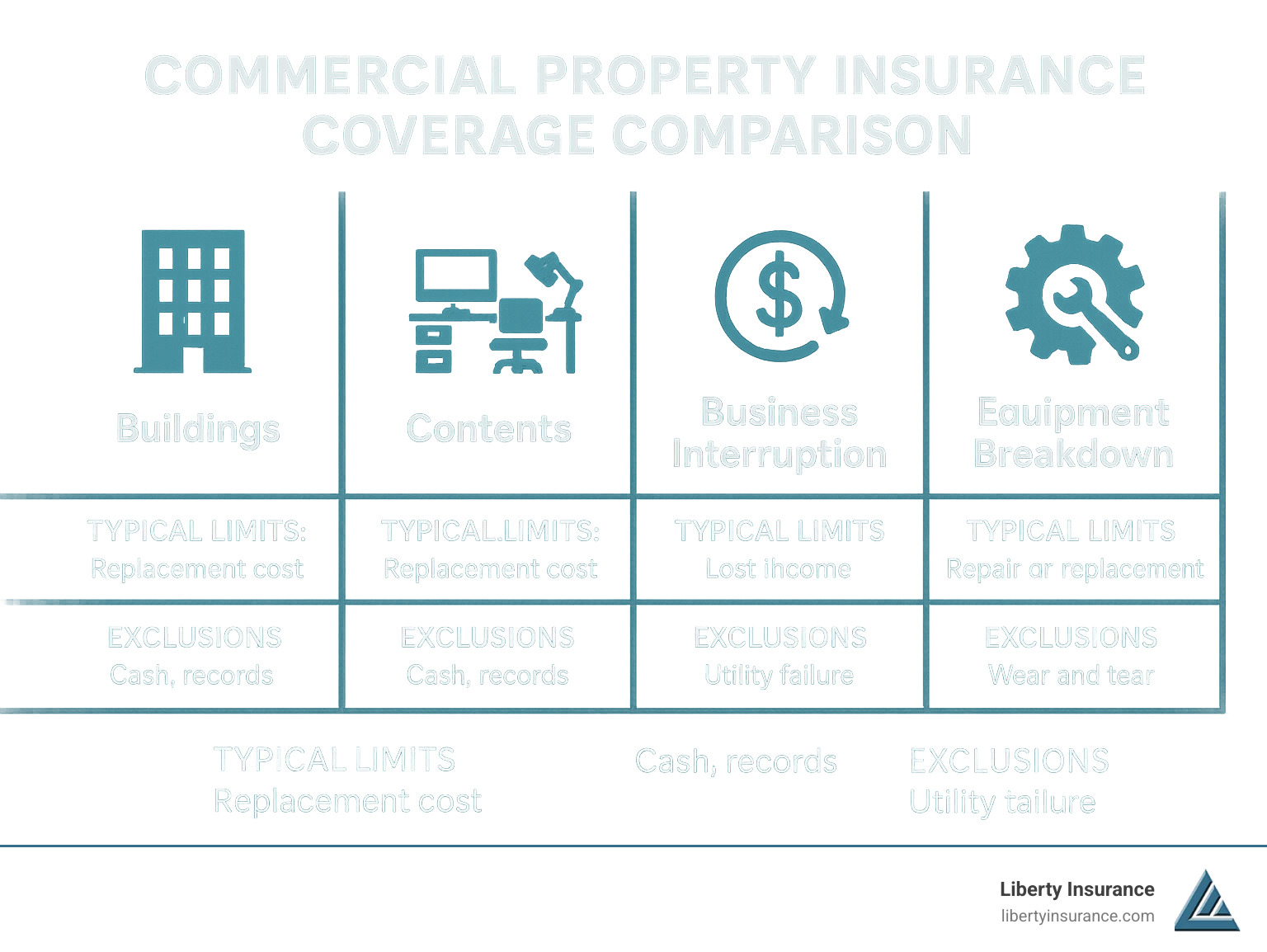
Did you know that 40% of small businesses have never been insured? That’s a shocking number when you consider the risks involved.
As an entrepreneur, you need to protect your assets, employees, and income. But where do you start? Let’s break down the essential types of insurance your small business needs.
Essential Insurance Policies for Small Businesses
There are a few insurance policies that every small business should consider. These are your basic safety nets.
- General Liability Insurance: Protects against third-party claims of bodily injury and property damage.
- Property Insurance: Covers damage to your business property, like buildings and equipment.
- Workers’ Compensation Insurance: Provides coverage for employee injuries sustained on the job.
- Professional Liability Insurance: Also known as Errors and Omissions insurance, this covers lawsuits over professional mistakes.
Liability Insurance vs. Property Insurance for Small Businesses
When it comes to safeguarding your business, understanding the difference between liability and property insurance is crucial. So what’s the deal?
| Liability Insurance | Property Insurance |
|---|---|
| Covers legal costs and damages if someone sues you for injury or property damage. | Protects your business assets from risks like fire, theft, or vandalism. |
| Essential if your business interacts with clients or customers. | Critical if you own or lease physical space for your business. |
Benefits of Having Business Interruption Insurance
Imagine your business is forced to close temporarily due to a natural disaster. What happens to your income? This is where business interruption insurance saves the day.
Business interruption insurance compensates for lost income during periods when you cannot operate. It can also cover relocation expenses if you need to move your business temporarily.
Pro Tip: Ensure your policy covers the specific risks your business is likely to face in its location.
Optional Insurance Coverages for Specific Industries
Depending on your industry, additional insurance coverages may be beneficial. Here are some options:
- Cyber Liability Insurance: Protects against data breaches and cyber-attacks.
- Product Liability Insurance: Essential for businesses that manufacture or sell products.
- Commercial Auto Insurance: Needed if your business uses vehicles for operations.
- Inland Marine Insurance: Covers goods in transit over land. Ideal for logistics businesses.
How to Choose the Right Insurance Policy for Your Business

You might be thinking, “How hard could it be to choose an insurance policy for my business?” Well, choosing the wrong one could cost you big time. Let’s dive in.
The insurance market is a labyrinth of options. There’s no such thing as a one-size-fits-all policy for small businesses. Every business is unique and so are its insurance needs.
Evaluating Insurance Providers for Small Businesses
Before you sign on the dotted line, it’s crucial to assess the credibility of your insurance provider. You wouldn’t buy a used car without checking its history, right? The same goes for insurance.
- Check their financial stability. Use ratings from agencies like A.M. Best.
- Look at customer reviews. A stellar reputation can speak volumes.
- Consider their claims process. Is it smooth or a nightmare?
Factors to Consider When Choosing an Insurance Policy
Your policy should fit your business like a glove, but how do you ensure that? Focus on these key factors:
- Coverage Scope: Does it cover all potential risks?
- Policy Limits: Make sure they’re sufficient to cover worst-case scenarios.
- Premium Costs: The cheapest option isn’t always the best.
- Exclusions: Read the fine print to avoid surprises later.
Pro Tip: Always ask for a sample policy document before committing. It’s your chance to spot any red flags early on.
Step-by-step Procedure to Assess Business Needs
Here’s how you can match your business needs to the right insurance products:
- Identify your business risks. Brainstorm potential liabilities.
- Evaluate the value of your assets. Know what you stand to lose.
- Consult with a trusted advisor. A fresh perspective can clarify your needs.
- Compare policies side by side. Look for those aligning closest with your requirements.
Let’s sum it all up:
| Factor | Importance Level | Description | Examples |
|---|---|---|---|
| Financial Stability | High | Ensures the provider can pay claims | A.M. Best ratings |
| Coverage Scope | High | Matches all potential risks | Liability, Property, Cyber |
| Premium Costs | Medium | Affordable but comprehensive | Monthly vs. Annual payments |
| Exclusions | High | Avoids unexpected denials | Acts of God, War |
Costs of Small Business Insurance and Budgeting
How much should small business insurance cost? If you’re like most small business owners, the answer to this question can be baffling. Here’s the deal: knowing the cost upfront can be a game-changer for your budget.
On average, small business insurance can run you anywhere from $500 to $5,000 per year, depending on a multitude of factors. But don’t let that number scare you. Understanding how costs break down and how to effectively budget for them is crucial for your financial planning.
Breaking Down Insurance Costs by Business Size
The size of your business significantly impacts your insurance costs. For instance, a small retail shop will have different premiums than a tech startup. But how do you figure out what you should be paying?
| Business Size | Average Cost | Factors Affecting Cost | Tips for Saving |
|---|---|---|---|
| Small (1-10 employees) | $500 – $1,500 | Location, industry, coverage needed | Bundle policies, increase deductibles |
| Medium (10-50 employees) | $1,500 – $3,000 | Claims history, business revenue | Shop around, implement safety measures |
| Large (50+ employees) | $3,000 – $5,000 | Risk exposure, number of employees | Regularly review policies, negotiate rates |
Pro Tip: Always review your insurance needs annually. This ensures that you’re not over-insured or under-insured as your business evolves.
Budgeting Strategies for Small Business Insurance
Don’t have a budget yet? You might be putting your business at risk. Here’s how you can start budgeting your insurance costs effectively:
- Calculate your total operating expenses and allocate a percentage to insurance.
- Consider setting up an emergency fund for unexpected premium increases.
- Use financial forecasting tools to predict future insurance costs.
By taking these steps, you’ll find that managing your small business insurance costs is less daunting and more actionable.
Common Mistakes to Avoid When Purchasing Small Business Insurance
Are you sure you’re not overpaying or under-insuring your small business? These are some of the critical pitfalls that many small business owners fall into when purchasing insurance. Let’s dive into the specifics and make sure you avoid these traps.
One of the biggest mistakes small business owners make is not fully understanding their coverage needs. This often leads to either underinsurance or overinsurance. Both can be costly. Underinsurance means you might not be covered when disaster strikes, while overinsurance means you’re spending more than necessary. But here’s the deal: you don’t have to fall into either trap.
Avoiding Underinsurance and Overinsurance
It’s crucial to evaluate the specific risks associated with your business. For example, if you run a bakery, you might need coverage that protects your equipment and inventory from damage or theft. On the other hand, a consultancy firm may prioritize professional liability insurance. By tailoring your policy to your business type, you can ensure you’re not paying for unnecessary coverage, or worse, leaving gaps in your protection.
The Importance of Regularly Reviewing and Updating Insurance Policies
Insurance needs change as your business evolves. A policy that was sufficient when you had two employees might not be adequate when you have twenty. Regularly reviewing your insurance policy ensures it aligns with your current business operations. Don’t set it and forget it; instead, make it a part of your annual business review.
- Assess your current and future risks.
- Consult with a trusted insurance advisor regularly.
- Update your policy with any business changes such as new locations or additional services.
- Compare quotes from multiple providers to ensure competitive rates.
Pro Tip:
Schedule a semi-annual insurance check-up with your advisor to catch any changes in your coverage needs early.
This strategy keeps you proactive, not reactive, when it comes to business protection.
The Impact of Not Having Insurance on Small Businesses
Think not having insurance is no big deal? Think again. The risks of being uninsured can sink your small business faster than you might imagine.
When you don’t have insurance, you’re not just rolling the dice—you’re betting the entire house. All it takes is one unexpected disaster, like a fire or lawsuit, and you could be facing financial ruin. But that’s just the tip of the iceberg.
Real-Life Consequences of Operating Uninsured
Imagine this: A small bakery suffers a fire, losing all its equipment and stock. Without insurance, the owners are left with devastating debts. They can’t reopen without incurring huge costs, and the business shutters permanently.
In another scenario, consider a freelance graphic designer who damages a client’s expensive equipment. Without liability insurance, they are personally liable for thousands in repairs and could even face legal actions that cripple their finances.
“We thought insurance was an unnecessary expense—until our shop flooded. Rebuilding without insurance was a nightmare. If I could go back, I would get insured from day one.”
Legal and Financial Repercussions
Operating without insurance isn’t just risky; it can be illegal depending on your location and industry. Many jurisdictions require certain types of insurance, like workers’ compensation. Fail to comply, and you could face hefty fines or even be forced to close your doors.
The financial hit from not having insurance is another beast entirely. Uninsured losses mean out-of-pocket costs, which can lead to mounting debts and, ultimately, bankruptcy. Not to mention, you lose peace of mind, constantly worrying about what might happen next.
Here is the deal: Insurance isn’t just a safety net; it’s a business essential. Without it, you’re walking a tightrope without a safety net.
“I didn’t think I needed insurance until a client sued me for breach of contract. The legal fees nearly bankrupted me. It’s a hard lesson, but now I know better.”
Final Summary
In the bustling world of small business, insurance isn’t just a safety net—it’s a lifeline. By understanding and choosing the right coverage, you’re not just safeguarding your business; you’re setting the stage for long-term success. Remember, being proactive about your insurance needs today can save you from potential pitfalls tomorrow.
Common Queries
What are the three essential types of small business insurance?
The three essential types are liability insurance, property insurance, and business interruption insurance.
Why is liability insurance important for small businesses?
Liability insurance protects your business from claims related to injuries or damages that occur on your premises or as a result of your operations.
How can small businesses save on insurance costs?
Consider bundling policies, increasing deductibles, and regularly reviewing your coverage to ensure you’re not overpaying.
What are common mistakes to avoid when buying small business insurance?
Avoid underinsurance, neglecting to update policies, and failing to thoroughly research insurance providers.
What could happen if a small business operates without insurance?
Operating without insurance can lead to significant financial losses, legal challenges, and even business closure in the event of lawsuits or disasters.
